Part 1: raw texts
url: https://www.archives.gov/research/holocaust/finding-aid/military/rg-226-3g.html
Part 1: raw texts
url: https://www.archives.gov/research/holocaust/finding-aid/military/rg-226-3g.html
The provenance history of these artworks -- especially during the period between the loss and the restitution -- shed light on looted art market laundering networks.
DATASET DESCRIPTION: This dataset contains restituted artworks listed on the German Lost Art Foundation that mention selected major Nazi-era auction houses in any capacity, anywhere in the record. (This means that some of the auctions occurred before the Nazi era.)
It is a deliberately small and targeted dataset for maximum linking potential to major data aggregators, notably the Getty Provenance Index, the Heidelberg Sales catalogs, Proveana, Wikidata, and (for Dutch art), RKD and well as to (where relevant) museum identifiers.
The purpose is to facilitate the linking of detailed data concerning the artworks, their owners, the intermediaries, the auction houses and the claims process.
Every name and post 1932 auction event in this dataset should be properly referenced and linked to major databases.
For reference use by provenance researchers, linked data experts, authority file managers, and museum people. (A couple of auctions are highlighted.)
Auction houses in the DATASET selection of restituted items:
 The El Greco looted in 1944 by the Nazi Gestapo from Julius Priester passed through Rudolf J. Heinemann, (1901 – February 7, 1975) and the business he owned, Pinakos, and Frederick Mont (aka Fritz Mondschein) and the gallery he owned, Galerie Sanct Lukas, before being identified. The provenance of the looted artwork was falsified, and it took more than seventy years to find it, claim it and obtain restitution (in 2015).
 (Wikidata Queries run January 25, 2025)
Merges persons of concern and organisations of concern in Nazi looted art and includes, where available Status, GND, VIAF, Proveana and LCCN identifiers as well as alternate spellings for entity matching in provenance texts.
Download data in CSV format
Url of Public Google Sheet:
Description:
The dataset contains 745 entries and 10 columns, with the following details:
Columns Overview:
item: Contains Wikidata URIs for the entities.itemLabel: Labels or names of the entities.itemDescription: Descriptions of the entities.status: Provides information on the entity's status (e.g., related to Holocaust restitution cases or flagged as red flags).altNames: Alternative names for the entities; this column has some missing values (449 non-null out of 745).GND: German National Library identifiers; partially populated (423 non-null).Proveana: Proveana-related identifiers; partially populated (132 non-null).VIAF: Virtual International Authority File identifiers; partially populated (488 non-null).LCCN: Library of Congress Control Numbers; partially populated (302 non-null).RunDate: The date when the data was run/compiled.The following names are linked to Holocaust art and restitution cases stemming from the persecution of Jews in the Nazi era. Their presence in a provenance is a Flag that requires serious verification. (For art galleries, see "More Names of Concern".
"Definitely not a reliable or trustworthy source for cataloguing"
What does it mean to find Arthur Pfannstiel in a provenance or as the author of a reference?

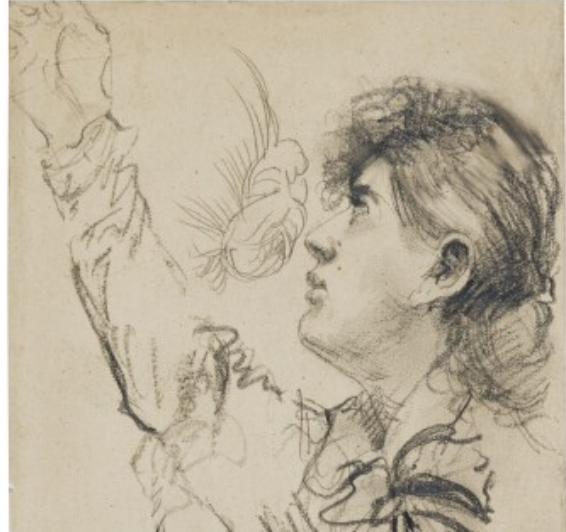 |
| Adolph Menzel, restituted to the heirs of Walter Westfeld |
Below is a selection of several provenances published online by Sotheby's. Some of the provenance texts indicate that artworks put up for auction had previously been restituted to the families of persecuted collectors.
For the artworks that have been restituted, the provenances - before the restitution - offer clues to how the resale market for Nazi-looted art worked. Through which hands did the artworks pass? Do any names recur?
 |
| Madonna and Child DIA inv 67.119 |
Provenance researchers know that the ownership history of artworks has a tendency to change over time. Snapshots of provenance texts published by a cultural heritage institution at a specific point in time are valuable sources of information not only about the history of the artworks but also about the history of the museum.
The list below was originally published by the Detroit Institute of Art on its public website in its provenance listings ("http://www.dia.org/art/provenance-listings.aspx").
This version dates from 2015.
---
---
for original file see:
https://archive.ph/uISaz#selection-929.1-934.0
For recent versions of the provenance, please consult the website of the Detroit Institute of Art
This post publishes in Italian the Art Looting Investigation Red Flag List of Names which was originally written in English in 1945-6.
(Translated from English into Italian by Deepl)
(update in progress)
Titolo
https://www.lootedart.com/MVI3RM469661
Descrizione
Nel 1944 il governo degli Stati Uniti creò un'unità speciale di intelligence che si occupava di arte saccheggiata, formata e amministrata dall'OSS. Nel corso del 1945 e 1946, questa unità, chiamata Art Looting Intelligence Unit (ALIU), produsse 16 rapporti stampati.
Un indice dei nomi che elenca tutti gli individui, i commercianti e le agenzie che appaiono in uno di questi rapporti è disponibile qui. L'indice dei nomi può anche essere cercato su questo sito cliccando sul pulsante "Cerca" e digitando un nome nella casella di ricerca delle informazioni.
I NOMI DELLE BANDIERE ROSSE E I DETTAGLI DELLE LORO ATTIVITÀ IN TEMPO DI GUERRA SONO ANCHE RIPORTATI IN FONDO A QUESTO DOCUMENTO, ORGANIZZATI IN ORDINE ALFABETICO PER PAESE DI ATTIVITÀ.
I rapporti ALIU sono di tre tipi:

The content below has since disappeared from the internet. A few entries can now be found in the internet archive or, in modified form, on Proveana. Others appear to be lost.

Geiger has been a subject of interest to us for a while. (See: "Geiger" artworks currently in American or British museums)
In this post, we look at a few of the artworks that have been auctioned at Christies or Sothebys that have some link to Benno Geiger, either in the provenance (an obvious red flag that calls for in depth verification) or in the references. Why references? Because Nazi art looters like Benno Geiger have been known to lie about ownership histories.
Warning: given Geiger's involvement in the art market for Nazi-looted artworks and forced sales, there is no guarantee that the provenances are correct or complete. Sometimes, however, bringing the texts together in one place can make it easier to see the patterns that remain hidden when one studies each artwork individually.
The Montreal Museum of Fine Arts maintains an "up-to-date register of all works with incomplete provenance records for the years 1933 to 1945" in order to facilitate provenance research.
We have put the information into an easy to use file for digital analysis.
VIEW MBAM artworks with incomplete provenances 1933-1945 HERE.


In this post, using the Looted Art Detector developed at the Swiss Glamhack2020 and Glamhack2021, we rank artworks that contain a mention of Munich according to the criteria of "Uncertainty".
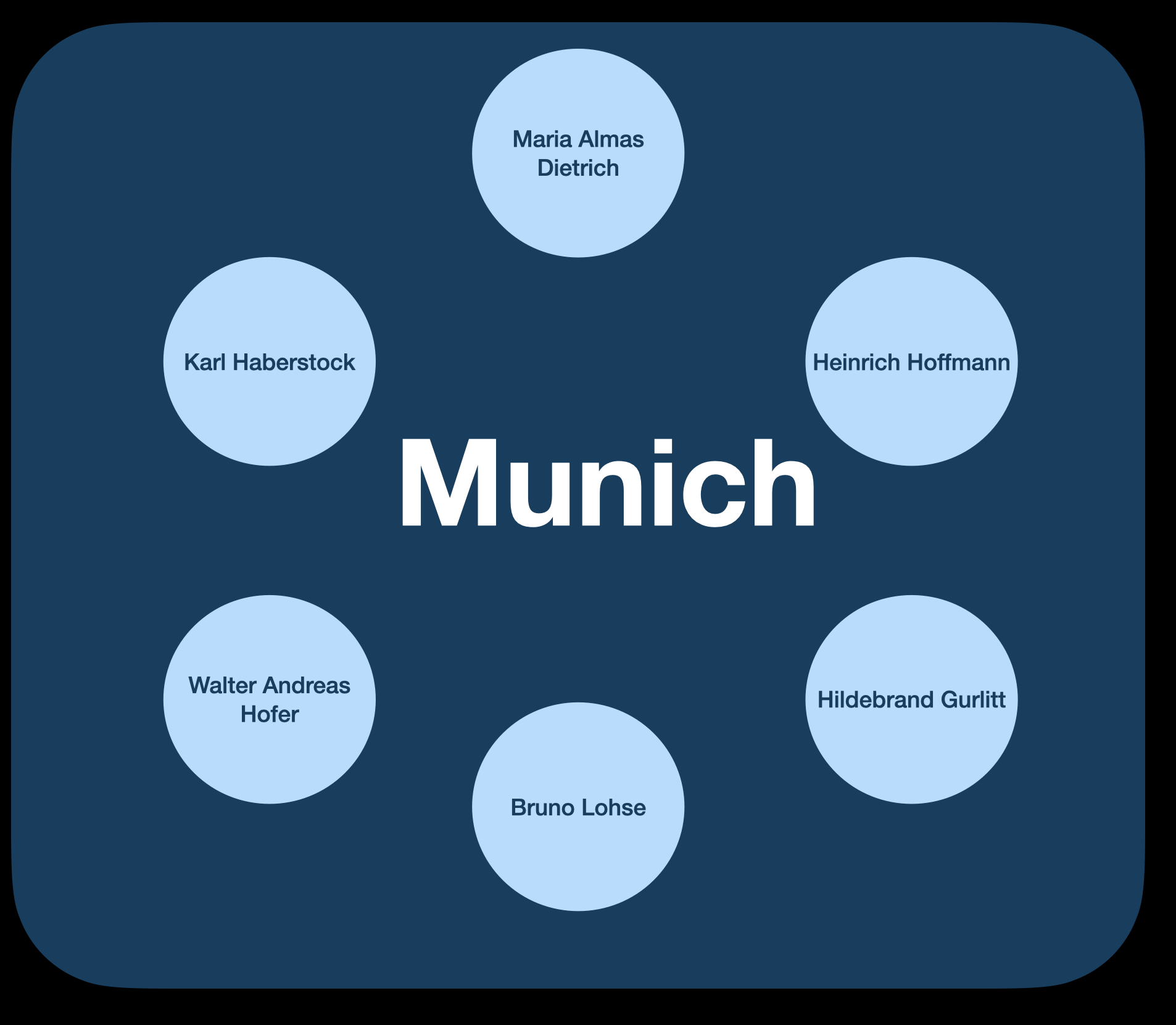
Which names have replaced theirs in the provenance texts?

"Voss would now channel his purchase funds, which would surpass those spent by Posse, through his own trusted agents, principal among whom was Hildebrand Gurlitt..."
- The Rape of Europa: The Fate of Europe's Treasures in the Third Reich and the Second World War by Lynn Nicholas
"Despite their disgust the OSS and MFAA men were human. Craig Smyth, who later had to supervise the house arrest of Hermann Voss, found it difficult to treat so eminent a scholar as a criminal and had him report daily to someone else. Monuments officer Charles Parkhurst, sent to question the widow of Hans Posse, whom he found living on the proceeds of sales of the pathetic contents of two suitcases of family bibelots, described her as a “gentle, elderly person” and broke off his interrogation when she began to weep. In the few answers she did provide it was clear that she was very proud of her husband’s accomplishments. She even showed Parkhurst photographs of Hitler at Posse’s state funeral, but of his actual transactions she clearly knew nothing."
- The Rape of Europa: The Fate of Europe's Treasures in the Third Reich and the Second World War by Lynn Nicholas
"Plaut doubted that Bruno Lohse had really known the extent of Goering’s evildoing and noted that both he and Fräulein Limberger had become despondent when all was revealed. Rousseau and Faison too, after weeks of questioning Miss Limberger, were convinced that despite the fact that she had read the damning daily correspondence from Hofer to Goering, she bore no blame. When they had finished with her, Faison could not bring himself to leave her at the squalid internment camp to which she had been assigned and instead asked her where she would like to go. She named the Munich dealer Walter Bornheim, he of the suitcases full of francs, and a principal supplier to both Linz and Goering. Faison consented, and left her at the military post in Gräfelfing, where Bornheim lived."
- The Rape of Europa: The Fate of Europe's Treasures in the Third Reich and the Second World War by Lynn Nicholas
available on Amazon

